
Pear-Shaped vs Oval Diamonds: Which Diamond Shape Should You Buy in 2026
Choosing the right diamond shape is one of the most important decisions when buying fine jewellery. Among the most popular elongated diamond cuts today, oval and pear-shaped diamonds consistently stand out for their elegance, brilliance, and ability to make a diamond appear larger than its actual carat weight.
In 2026, both shapes remain highly desirable, especially in engagement lab-grown diamond rings and bespoke jewellery. However, each offers a very different aesthetic, personality, and styling advantage. Understanding these differences is key to selecting the diamond that best suits your hand, style, and long-term preferences.
At Devi Diamonds, we specialize in crafting IGI-certified lab-grown diamond jewellery that balances timeless design with modern sophistication. This guide breaks down the differences between pear-shaped and oval diamonds so you can make a confident and informed choice.
Understanding the Two Diamond Shapes
Oval Diamonds
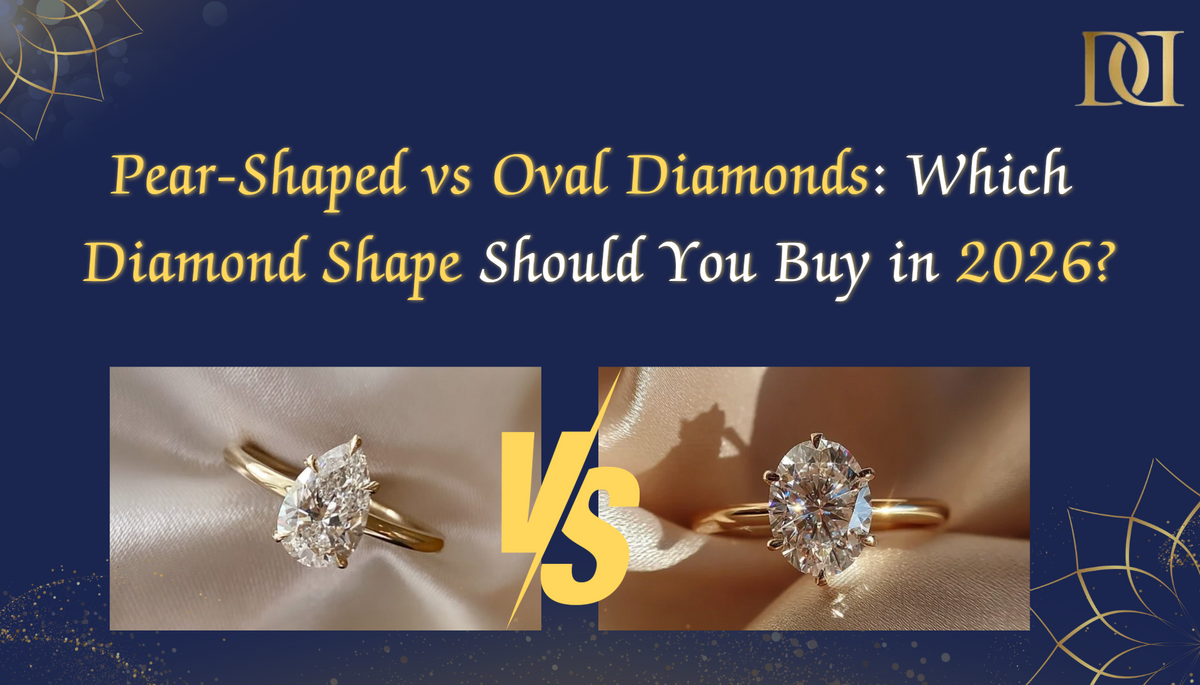
An oval diamond is essentially a modified brilliant-cut round diamond with an elongated silhouette. It is known for its symmetrical shape, continuous sparkle, and balanced proportions.
Oval diamonds are widely considered one of the most versatile and universally flattering diamond shapes.
Pear-Shaped Diamonds
A pear-shaped diamond combines the rounded end of an oval with the pointed tip of a marquise cut. It has a distinctive teardrop silhouette that feels more artistic and expressive.
Pear diamonds are often chosen by buyers who want something elegant but slightly more unique and statement-driven.
Visual Appearance: Which Looks Bigger?
Both oval and pear-shaped diamonds create excellent size perception due to their elongated structure, but they do so in slightly different ways.
Oval diamonds tend to look larger face-up because of their wider surface area and balanced spread of light. Their symmetry creates an even brilliance across the entire stone, which enhances the overall visual size.
Pear-shaped diamonds, on the other hand, create a strong directional illusion. The pointed tip draws the eye downward, which elongates the finger and enhances perceived length. While they may appear slightly smaller than oval diamonds of the same carat weight in some cases, they often feel more dramatic in silhouette.
In terms of pure face-up spread, oval diamonds generally have a slight advantage. In terms of visual drama and elongation, pear-shaped diamonds excel.
Also read: Oval vs round diamond which looks bigger on the finger
Brilliance and Sparkle Comparison
Oval diamonds typically offer more consistent brilliance due to their symmetrical faceting pattern. Light is distributed evenly across the stone, creating a uniform sparkle that feels soft, elegant, and continuous.
Pear-shaped diamonds also offer strong brilliance, but the distribution of sparkle is slightly more directional. The rounded end tends to show more brilliance, while the pointed tip can sometimes appear slightly darker depending on cut quality.
For buyers prioritizing maximum sparkle across the entire surface, oval diamonds are usually preferred. For those who value character and contrast in light performance, pear shaped diamonds are highly appealing.
Finger Appearance and Styling Impact
Both shapes are excellent for creating a flattering effect on the hand, but they enhance finger appearance in different ways.
Oval diamonds are known for their ability to elongate the finger while maintaining balance and symmetry. They are particularly flattering for most hand types because they create a clean, continuous line without sharp edges.
Pear-shaped diamonds create an even stronger elongation effect due to their pointed tip. When worn with the point facing downward, they draw the eye vertically, making fingers appear longer and more slender.
In styling terms, oval diamonds feel more classic and universally balanced, while pear-shaped diamonds feel slightly bolder and more fashion-forward.
Also Read: Best Lab diamond shapes for every finger type
Style Personality: What Each Shape Says
Oval diamonds are often associated with understated elegance. They are popular among buyers who prefer timeless luxury, minimal styling, and versatility across everyday and occasion wear. Oval shapes fit seamlessly into both modern and traditional jewellery designs.
Pear-shaped diamonds, in contrast, are more expressive and distinctive. They are often chosen by individuals who prefer jewellery with personality and a subtle statement edge. The asymmetry of the shape adds uniqueness without feeling overly extravagant.
Popular Settings for Each Shape
Oval diamonds are commonly set in solitaire, hidden halo, and pavé designs. Their symmetry makes them extremely versatile across both classic and modern settings. Thin bands are often used to enhance their elongated appearance.
Pear-shaped diamonds are frequently used in halo settings, three-stone rings, and east-west orientations. They also look particularly elegant in pendant necklaces, where the teardrop silhouette can stand out beautifully.
At Devi Diamonds, both shapes are often customized into bespoke designs depending on whether the client prefers minimal elegance or more expressive styling.
Trends in 2026: Which Shape Is More Popular?
In 2026, oval diamonds continue to dominate global engagement lab-grown diamond ring trends due to their balance of size, brilliance, and timeless appeal. This is strongly reflected in modern bridal styling seen across luxury and fashion brands such as Tiffany & Co., Cartier, and Harry Winston, where oval solitaires and elongated silhouettes are increasingly featured in contemporary engagement collections and campaign imagery.
At the same time, pear-shaped diamonds are experiencing a strong resurgence, especially in fashion-forward jewellery styling. Designer brands like Bvlgari, Messika, and Anita Ko have played a major role in popularising pear-shaped and teardrop-inspired designs, often
incorporating them into layered lab-grown diamond necklaces, asymmetric earrings, and modern minimalist rings.
Additionally, fashion houses such as Dior and Chanel have influenced this shift by styling fine jewellery with ready-to-wear collections, where diamonds are no longer reserved for formal occasions but paired with structured blazers, silk shirts, and everyday luxury outfits. This has helped normalize both oval and pear shapes as part of daily fashion rather than purely bridal or ceremonial wear.
The current trend can be summarized as:
- Oval diamonds dominate timeless luxury and everyday elegance
- Pear-shaped diamonds dominate expressive, fashion-led jewellery styling
Price and Value Considerations
When comparing lab-grown diamonds, both oval and pear shapes offer excellent value. However, oval diamonds are often slightly more expensive due to higher demand and cutting precision requirements.
Pear-shaped diamonds can sometimes offer better pricing for similar carat weights, making them attractive for buyers looking to maximize size within a budget.
Since both are available in IGI-certified lab-grown diamond options, buyers can prioritize shape and style without compromising on quality.
Which One Should You Choose?
The choice between oval and pear-shaped diamonds ultimately comes down to personal style and lifestyle preferences.
You may prefer an oval diamond if you value:
- Timeless elegance
- Balanced symmetry
- Maximum sparkle
- Versatility across all occasions
You may prefer a pear-shaped diamond if you value:
- Unique, expressive design
- Strong finger elongation
- A slightly bold aesthetic
- Fashion-forward styling
Both shapes are equally luxurious when crafted with precision and high-quality cutting.
Final Thoughts
Oval and pear-shaped diamonds are both exceptional choices for modern jewellery buyers in 2026. While oval diamonds offer unmatched versatility and balanced brilliance, pear shaped diamonds provide individuality and a distinctive teardrop elegance.
At Devi Diamonds Gurgaon, we craft IGI-certified lab-grown diamond jewellery in both shapes, ensuring each piece reflects superior craftsmanship, ethical sourcing, and timeless design. Whether you prefer the classic sophistication of an oval diamond or the expressive beauty of a pear-shaped stone, the right choice is the one that aligns with your personal style and story.
FAQs
1. Which diamond shape looks bigger: pear-shaped or oval?
Oval diamonds generally appear slightly larger than pear-shaped diamonds of the same carat weight because they have a broader face-up surface area. Pear-shaped diamonds, however, create a stronger finger-elongating effect due to their pointed silhouette.
2. Which diamond shape is better for making fingers look slimmer?
Pear-shaped diamonds are especially known for creating a slimming and elongating effect on the fingers because the pointed end naturally draws the eye vertically.
3. Are pear-shaped diamonds more unique than oval diamonds?
Yes, pear-shaped diamonds are often considered more distinctive and fashion-forward because of their teardrop silhouette and asymmetrical design, while oval diamonds are viewed as more classic and universally versatile.
4. Which diamond shape is better for engagement rings?
Both shapes are highly popular for engagement rings. Oval diamonds are ideal for buyers seeking timeless elegance, while pear-shaped diamonds are preferred by those wanting a more expressive and unique style.
5. Are pear-shaped diamonds harder to maintain?
Pear-shaped diamonds require slightly more care because the pointed tip is more vulnerable to chipping. Protective settings like V-prongs are commonly used to enhance durability.

Written by Vansh Bumb