

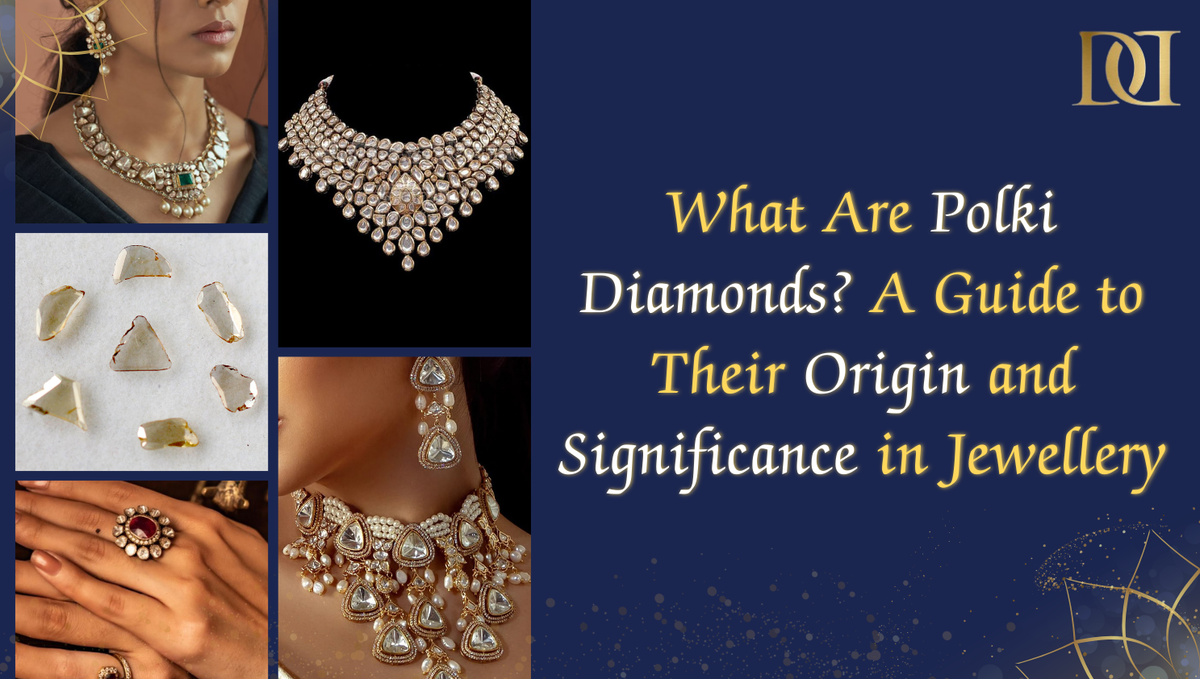
What Are Polki Diamonds? A Guide to Their Origin and Significance in Jewellery
For centuries, Polki diamonds have held a special place in Indian jewellery. Their raw, uncut beauty, antique charm, and regal presence have made them a favorite for brides who want to celebrate tradition in the most elegant way. But many may ask, what exactly are Polki diamonds? How are they different from regular diamonds? And why do they continue to be one of the most treasured forms of Indian jewellery?
In this complete guide, we explore the origin, history, craftsmanship, and cultural significance of Polki diamonds. Along with this, we will tell you why they remain an iconic choice for bridal jewellery even today, and how they carry the tradition of Indian jewellery to every wedding.
What Are Polki Diamonds?
Polki diamonds are natural, uncut, and unpolished diamonds that are used in their raw form. Unlike regular diamonds that go through extensive cutting and polishing processes, Polki diamonds retain their natural shape and shine.
They have:
- A raw, organic look
- A warm, soft sparkle (not sharp brilliance like cut diamonds)
- A vintage, royal charm
- A slightly translucent appearance
Because they are used almost exactly as they are found, Polki diamonds are considered one of the oldest forms of diamond jewellery craftsmanship.
In simple words, they are real diamonds, just not faceted like modern stones.
The Origin & History of Polki Diamonds
Polki diamonds trace their roots back over 2,500 years to ancient India. They were first used in the Mughal era, when Indian royalty preferred uncut gemstones because of their raw and powerful aesthetic.
Why were they loved by royalty?
- They symbolized luxury and status
- They preserved the diamond’s natural structure
- Their flat, uncut surface worked beautifully in elaborate gold settings
- They paired perfectly with other gemstones and enamel work
From Mughal emperors to Rajput queens, Polki jewellery became a symbol of power, tradition, and artistic finesse.
Today, Polki diamonds continue to be a preferred choice for bridal jewellery, echoing centuries of Indian heritage.
How Are Polki Diamonds Made?
Even though Polki diamonds are uncut, the process to make Polki jewellery is quite elaborate and extensive.
1. Selecting the raw diamond
Artisans choose natural uncut diamonds with good clarity and shape.
2. Placing the diamond in a gold frame
Each diamond is set in a handmade 22K gold foil that enhances its reflection and stability. This technique is called Jadau work, one of India’s oldest jewellery crafts.
3. Back foiling for brilliance
Unlike cut diamonds that reflect light internally, Polki diamonds need a reflective foil backing to create their signature sheen.
4. Handcrafted assembly
Every piece — necklaces, chokers, earrings — is crafted by hand over several days or even months depending on complexity.
This high level of craftsmanship is why Polki jewellery is considered premium and often forms part of heirloom collections.
Polki vs. Regular Diamonds: What’s the Difference?
|
Feature |
Polki Diamonds |
Regular/Cut Diamonds |
|
Appearance |
Raw, uncut, antique look |
Sparkling, polished brilliance |
|
Finish |
Untrimmed, natural |
Faceted with precise cuts |
|
Shine |
Soft glow |
High brilliance and fire |
|
Weight |
Heavier because they aren't cut down |
Slightly lighter |
|
Price |
Higher handcrafted cost |
Pricing depends on 4Cs |
|
Usage |
Bridal, traditional, heritage jewellery |
All types: modern + traditional |
Both are real diamonds, but their character, aesthetics, and purpose are completely different.
Polki vs. Kundan: Are They the Same?
One of the biggest confusions in Indian jewellery is the difference between Polki and Kundan.
Polki Diamonds
✔ Made with real, uncut diamonds
✔ More premium and expensive
✔ Have natural sparkle
✔ Used in high-end bridal sets
Kundan
✔ Uses glass or crystal instead of diamonds
✔ More affordable
✔ Also uses gold foil technique (Jadau)
✔ Beautiful but not diamond jewellery
Quick Rule to Keep in Mind:
Polki = Real diamonds
Kundan = Imitation gemstones
Why Brides Love Polki Jewellery
Polki diamond jewellery has always been a favorite for Indian brides because of its:
- Traditional, royal aesthetic
- Heavy, luxurious look
- Ability to complement lehengas and ethnic wear
- Warm, rich glow that suits Indian skin tones
- Handcrafted detailing with cultural depth
It is especially popular for:
- Wedding day sets
- Sangeet chokers
- Reception heirloom pieces
- Multi-layered Raani Haars
- Mathapattis and Nath designs
Polki jewellery instantly elevates a traditional bridal look into something truly majestic.
Polki Jewellery at Devi Diamonds
While Devi Diamonds specializes in certified lab-grown diamond jewellery, we deeply appreciate India’s traditional artistry, and the heritage of Polki craftsmanship. Many brides love pairing their modern diamond pieces with classic Polki sets for a balanced wedding trousseau.
We often guide brides on how to:
- Mix modern diamond jewellery with Polki bridal wear
- Style Polki jewellery across wedding events
- Compare Polki vs. diamond designs based on budget and preference
Our goal is always to help brides make confident, informed jewellery choices that reflect their personality.
Final Thoughts
Polki diamonds are more than just a style, they are a part of India’s cultural legacy. Their raw beauty, royal finish, and handcrafted detailing make them perfect for brides who want a timeless, traditional look with deep roots in history.
Whether you're exploring Polki jewellery for your wedding or simply want to understand its significance, knowing the story behind these diamonds makes their charm even more special.

Written by Vansh Bumb


